Until now, the so-called ‘uptime’ of charging infrastructure was the primary metric used to indicate the technical availability of a charging point. However, uptime alone does not show whether a charging process actually successfully began for the user or whether it could be successfully completed. A corresponding meaningful metric to address this has been missing until now.
The Charging Success Rate takes the entire charging process at the charging station into account.
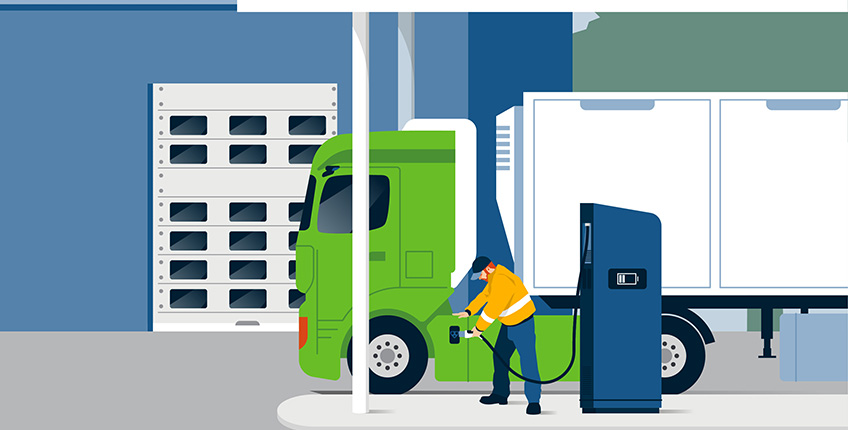
To measure success, the Charging Success Rate takes into account the entire charging process – from authentication to completion. The Charging Success Rate defines successful charging processes as the percentage of charging attempts where a charging transaction is successfully started (i.e. the charging station begins to supply electricity to the electric vehicle) and subsequently successfully completed. Data on each step of the charging process is available to operators on the standardised ‘Open Charge Point Protocol’ (OCPP). The authors of the accompanying publication emphasise that the quality and reliability of charging infrastructure can only be realistically assessed through a combination of technical and user-related metrics. The CSR captures precisely this connection. The goal is for operators to use this standardised definition in order to create an industry-wide, user-oriented comparative value.
Background: Electric mobility on the path to the mass market
There are currently around two million fully electric vehicles registered in Germany. The publicly available charging infrastructure comprises around 190,000 charging points, supplemented by charging infrastructure, including at individual retailers, company premises or in the private domain. Electric mobility in Germany is thus entering a decisive phase – entry into the mass market. This phase entails a sharp increase in the requirements for user-friendliness and reliability.
Johannes Pallasch, Head and Spokesperson of the National Centre for Charging Infrastructure under the umbrella of NOW GmbH: “Charging processes should work as smoothly as possible nationwide and integrate simply into everyday life. Difficulties starting the charging process or charging interruptions are not just annoying for users. How well charging works in practice is decisive for the continued success of electric mobility. Operators should be able to recognise and solve charging problems quickly and simply. Together with the P3 Group, we are contributing significantly to this with the Charging Success Rate calculation method.”
Markus Hackmann, Managing Director, E-Mobility&Energy, P3 Group
“From the customer perspective, uptime is a necessary but inadequate precondition for successful charging. Analysis of field data shows a significant difference between the purely technical uptime consideration and actual charging success from the point of view of the user. Therefore it is crucial to establish a user-oriented metric that measures and reflects real-world charging success. With our approach to the Charging Success Rate, we are creating transparency about the reliability of charging infrastructure for the first time, and together with the National Centre for Charging Infrastructure, delivering concrete starting points for improvement.
More on the Charging Success Rate and download: www.p3-group.com/p3-updates/charging-success-rate
About P3
The P3 Group is an independent, international technology and software consultancy firm headquartered in Stuttgart. One core focus of their activities is the topic of electric mobility. P3 has been active in this field since 1996 for the international automotive and energy industry and advises various stakeholders along the entire value chain – from battery cells to the roll-out of the charging infrastructure. With an electric mobility team of over 200 technology advisors, P3 also publishes opinion reports such as the P3 Charging Index for better comparability of charging capacities of various electric vehicles.
About the National Centre for Charging Infrastructure
On behalf of the Federal Ministry for Transport, the National Centre for Charging Infrastructure under the umbrella of the federally-owned NOW GmbH coordinates and managed the activities for expanding charging infrastructure in Germany. It helps to plan, implement and promote charging infrastructure. To better understand the demand for charging points, it collects relevant data. It connects all major stakeholders and passes on its expertise, always keeping the user in mind.