
Funding for Climate-Friendly Buses
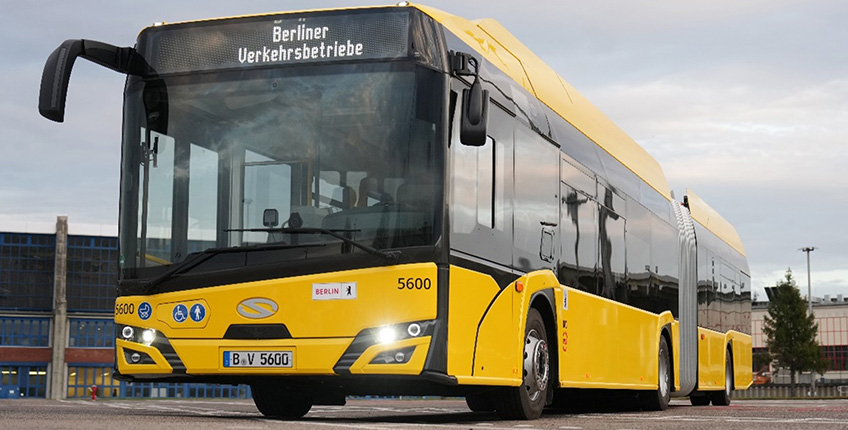
Currently, bus transport is still based almost exclusively on the use of diesel-powered vehicles. Converting buses to alternative and low-emission drives can also contribute to reducing greenhouse gases and air pollution. At the same time, these buses contribute to noise reduction.
The Climate Action Plan 2050, adopted by the German government in November 2016, is in line with the
results of the Paris Climate Conference. The German government has thus confirmed and further specified its ambitious national climate protection goals. In the transport sector, greenhouse gas emissions were previously
to be reduced by 40 to 42 percent by 2030 compared to 1990. On June 24, 2021, the German Bundestag passed the
new Federal Climate Protection Act. The amended law raises the German greenhouse gas reduction target for 2030 to minus 65 percent compared to 1990.
Buses in passenger transport can make a significant contribution to achieving targets. This funding guideline
is therefore intended to support the market ramp-up of buses with alternative drive systems in passenger transport. The funding focuses on the procurement of buses with alternative drive systems based on battery, battery overhead line and fuel cell technology, as well as buses that are 100% powered by methane produced from biomass. In addition, the procurement of charging as well as hydrogen and methane refueling infrastructure for the operation of the buses and the preparation of feasibility studies is supported.
Downloads & Links
Directive on the promotion of alternative drives for buses in passenger transport
The funding guideline is coordinated by NOW GmbH and implemented by the Project Management Jülich (PtJ):