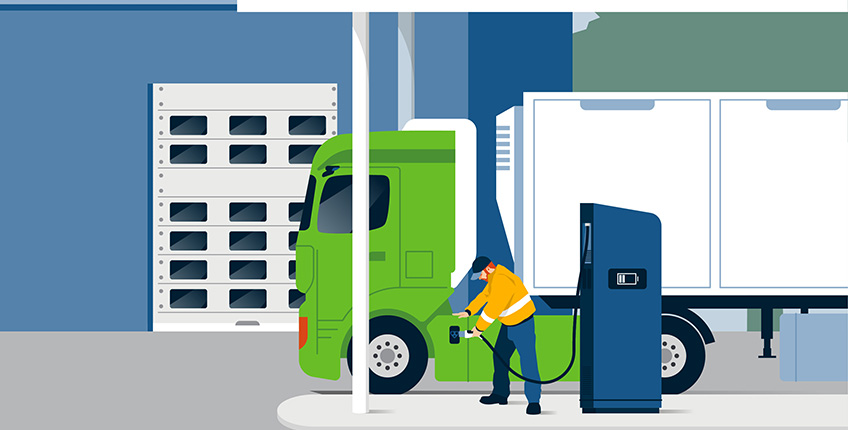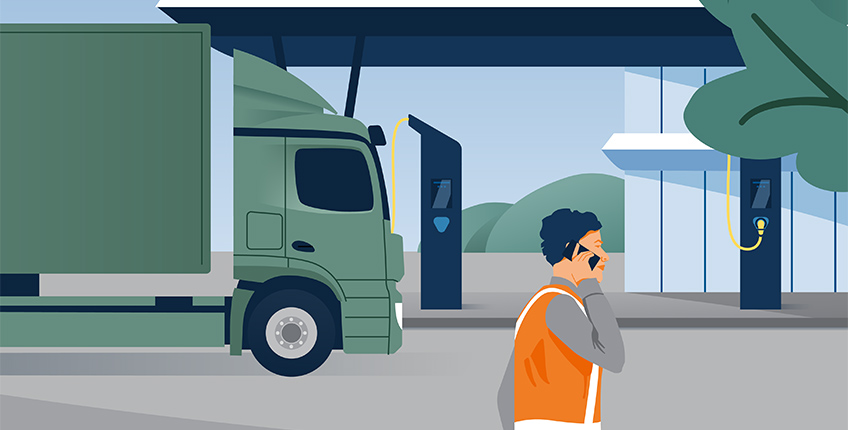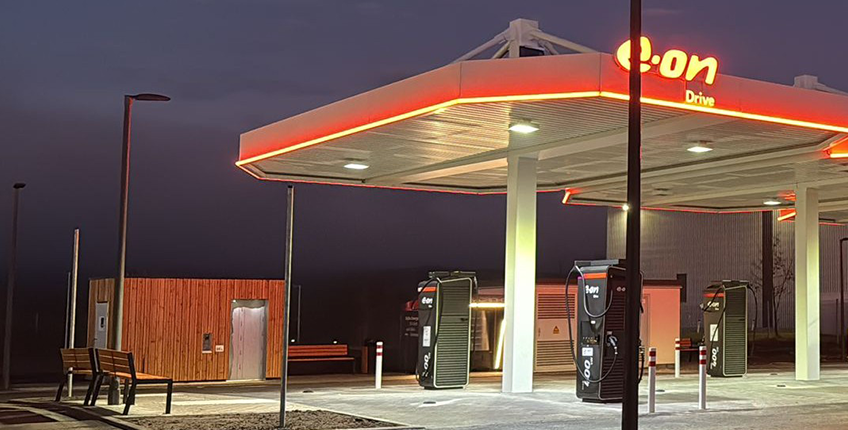
The EU Commission’s decision forms the basis for the first implementation step in the development of a nationwide, high-performance fast-charging network for trucks along motorways.
Patrick Schnieder, Federal Minister of Transport: “With the fast-charging infrastructure at unmanaged rest stops along motorways, we are creating a reliable entry point into public charging for heavy-duty electric trucks. We are starting where the federal government has direct responsibility, thereby ensuring planning security and speed in the ramp-up. The EU Commission’s decision enables us to quickly realise this first, decisive expansion step.”
First implementation step on state-owned land
The BMV is implementing the expansion together with Autobahn GmbH des Bundes and the National Centre for Charging Infrastructure under the umbrella of NOW GmbH. The initial focus is on unmanaged rest areas along federal motorways. The expansion of fast-charging infrastructure for trucks at other locations in the fast-charging network at managed rest areas is also planned for the future.
Charging infrastructure for heavy-duty vehicles
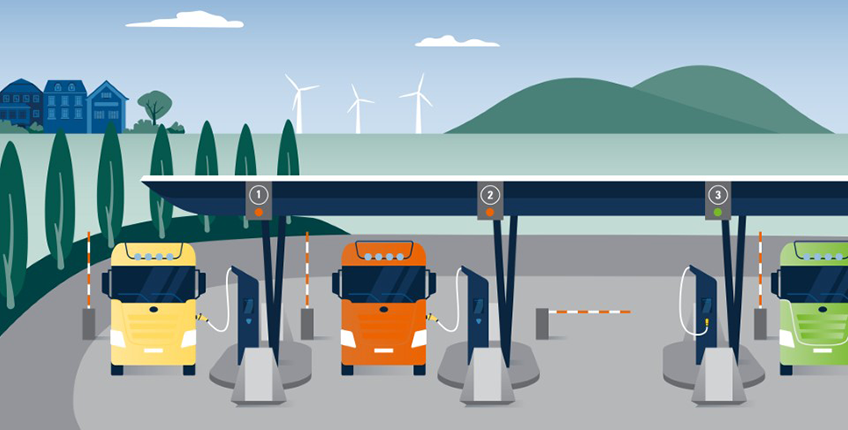
High-performance CCS and MCS charging points tailored to the requirements of heavy-duty commercial vehicles are to be installed at unmanaged rest areas:
- CCS (Combined Charging System) is a fast-charging standard established throughout Europe that is already used by many battery-electric trucks today.
- MCS (Megawatt Charging System) is a new high-performance standard that enables charging capacities in the megawatt range, allowing particularly short charging times for long-distance transport.
A total of up to 725 CCS charging points and up to 685 MCS charging points are planned for the unmanaged rest areas.
Dr Michael Güntner, Chairman of the Management Board of Autobahn GmbH des Bundes: “Parallel to the successful ongoing development of the fast-charging infrastructure for passenger cars, Autobahn GmbH is now also providing charging options for heavy-duty commercial vehicles at unmanaged rest areas. Our focus is on user-friendly, space-optimised and traffic-safe integration of the charging points at the rest areas in order to meet the special requirements of heavy-duty transport. Another key prerequisite for the operation of the charging infrastructure is the technically sophisticated grid connections, which we are implementing in close cooperation with more than 90 distribution system operators.”
Tendering process for unmanaged rest areas
The tendering process for the construction of the fast-charging infrastructure for trucks at unmanaged rest areas along the federal motorways was launched in September 2024 and is being carried out by the federal motorway company Autobahn GmbH.
Specifically, charging points are to be installed and operated at 124 unmanaged rest areas. Three charging options are planned: ad hoc charging, contract-based charging via electric mobility service providers (EMPs) and contract-based charging via third-party providers in order to strengthen competition and prevent the risk of excessive charging prices.
The approved support also serves to implement European expansion targets (AFIR Regulation) and the European Commission’s Clean Transport Corridor Initiative for Europe-wide battery-electric road freight transport on the TEN-T corridors by 2030.
Dagmar Fehler, CEO and spokesperson for NOW GmbH: “According to data from the National Centre for Charging Infrastructure, there are currently 64 publicly accessible truck charging locations in Germany – that’s a start. What is still lacking is nationwide coverage. For e-trucks to become economically attractive for the transport and logistics sector, the public charging network, especially on motorways, must also scale quickly, reliably and with high performance. This is precisely why setting up charging stations at unmanaged rest areas is a key first step: it creates planning and investment security and accelerates market ramp-up.”