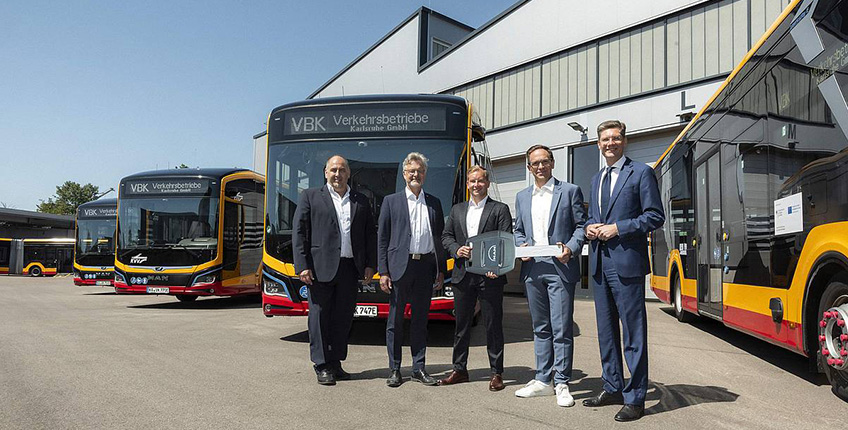
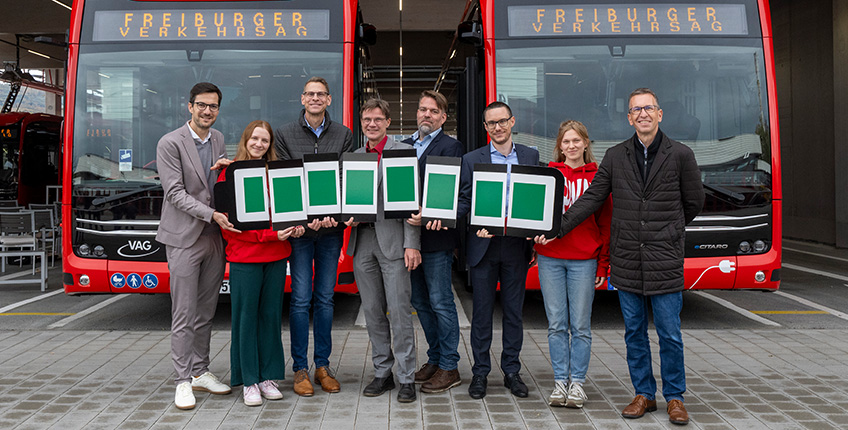
“We are optimistic that we will achieve our goal of operating a completely climate-neutral public transport service by 2030,” say Oliver Benz, CEO of VAG. “The electric buses not only reduce our carbon footprint, but also noise emissions. This is a great benefit for residents, passengers and therefore the city as a whole.”
Federal, state and city governments are supporting the transition
Federal Transport Minister Patrick Schnieder: “Modern and clean buses are an important building block for attractive public transport. They improve the service for passengers and contribute directly to climate protection. That is why we are providing targeted support to transport companies in their transition to environmentally friendly drive systems. We are providing around €7.2 million in funding support to VAG – an important boost for efficient and sustainable local transport in the region.”
Quiet, climate-friendly and electric – more than just new buses and e-bus ports
The implementation of e-mobility is changing the entire operational process at VAG and requires comprehensive expertise. A project team from all departments – from timetable planning and workshops to finance – is coordinating the transition.
€59 million for clean mobility
The total investment for the switch to e-buses (fleet, infrastructure, depot and route) currently amounts to around €59 million for the period from 2023 to 2030. Of this, €44 million will be spent on purchasing the buses and €15 million on the new infrastructure.
The project is being funded by the Federal Ministry of Transport (BMV) with a total of around €7.2 million as part of the ‘Guideline for the Promotion of Alternative Drives for Buses in Passenger Transport” (“Richtlinie zur Förderung alternativer Antriebe von Bussen im Personenverkehr”), with additional funding also provided under the German Recovery and Resilience Plan (DARP – Deutscher Aufbau- und Resilienzplan) via the European Recovery and Resilience Facilities (ARF – Europäische Aufbau- und Resilienzfazilitäten) in the NextGenerationEU programme. The funding guideline is coordinated by NOW GmbH and implemented by Project Management Jülich (PtJ). The Baden-Württemberg State Ministry of Transport has provided €12.2 million in funding for the charging infrastructure to date through the Municipal Transport Financing Act (GVFG – Gemeindeverkehrsfinanzierungsgesetz). The city of Freiburg is subsidising the switch to e-mobility with €23.4 million, of which €8 million comes from the Climate Protection Future Fund (Zukunftsfonds Klimaschutz).
A Europe-wide tender for a further 25 electric buses is in preparation. The switch to e-mobility by Freiburger Verkehrs AG is to be completed by 2030.
Source: VAG Freiburg