
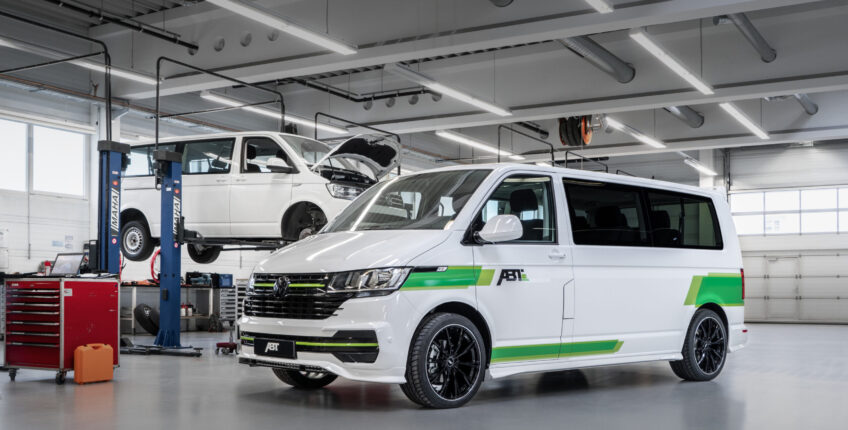
Besides water, hydrogen-powered light commercial vehicles do not produce any exhaust gases. This means that they can make a significant contribution to achieving climate protection goals.
The challenge of developing a vehicle-specific and application-optimised fuel cell drive design is simplified in this project by coupling virtual and real methods.
To achieve this, the operational management of the fuel cell and, in particular, the scaling effects of the periphery are being examined.